
Kajari Teej 2026: Date, Puja Vidhi, Vrat Katha, Sattu & Moonrise Rituals

Kajari Teej 2026 is a sacred Hindu festival celebrated with devotion, fasting, prayers, and traditional rituals dedicated to Lord Shiva and Goddess Parvati.
Also known as Kajli Teej, Badi Teej, and Satoori Teej, this festival is especially significant for married women who pray for their husband’s long life, good health, prosperity, happiness, and a harmonious married life. Unmarried women may observe the vrat while praying for a loving and suitable life partner.
But what is the date of Kajari Teej 2026?
What is the correct puja vidhi?
Why is Neemdi Mata worshipped?
Why is sattu important?
When should Arghya be offered to the Moon?
Let’s explore the complete significance, rituals, fasting rules, and spiritual message of Kajari Teej 2026.
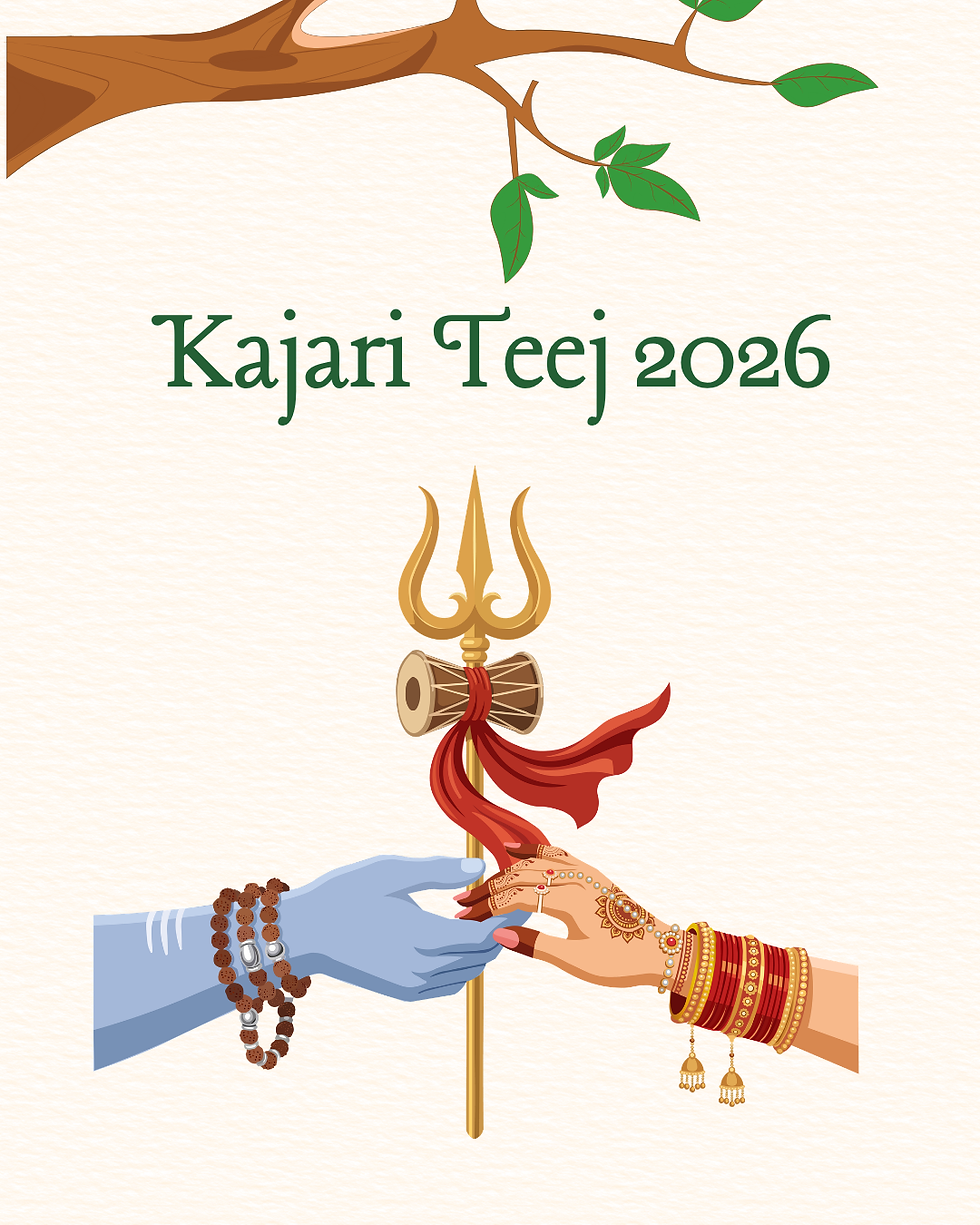
Kajari Teej 2026 Date & Tithi
Kajari Teej 2026 will be observed on Monday, August 31, 2026.
Tritiya Tithi Timings
Tritiya Tithi Begins: August 30, 2026, at 9:36 AM
Tritiya Tithi Ends: August 31, 2026, at 8:50 AM
Kajari Teej Vrat: Monday, August 31, 2026
Since Tritiya Tithi is present at sunrise on August 31, Kajari Teej will be observed on August 31 according to the Udaya Tithi tradition.
This year, Kajari Teej falls on Monday, a day traditionally associated with Lord Shiva, making Shiva-Parvati worship especially auspicious for devotees.
Why Is Kajari Teej Celebrated?
Kajari Teej represents:
Love and marital harmony
Devotion and faith
Prosperity and family well-being
Spiritual discipline
Prayer and emotional connection
Patience and unwavering commitment
Married women traditionally observe the vrat for their husband’s long life and well-being.
Unmarried women may observe Kajari Teej with prayers for a suitable life partner, while mothers may also pray for the health, happiness, and prosperity of their children.
Kajari Teej & Goddess Parvati’s Divine Story
The spiritual significance of the Teej festivals is closely connected with Goddess Parvati’s intense penance to attain Lord Shiva as her husband.
According to the traditional account associated with the Parvati Khanda of Rudra Samhita in the Shiva Purana, Goddess Parvati performed severe austerities and remained devoted to Lord Shiva through meditation and the chanting of the Panchakshara Mantra.
Her story represents the power of:
Faith + Patience + Devotion + Determination
It reminds devotees that sincere devotion and unwavering dedication have deep spiritual significance.
Why Is Neemdi Mata Worshipped on Kajari Teej?
One of the distinctive traditions associated with Kajari Teej is the worship of Neemdi Mata.
In several regions, devotees create a small pond using clean soil or clay and place a neem branch in the centre. The setup is then worshipped as Neemdi Mata.
🌿 Neem is traditionally associated with:
Purification
Protection
Positive energy
Spiritual cleanliness
The exact Neemdi Mata ritual may vary according to regional and family traditions.
Why Is Kajari Teej Called Satoori Teej?
Ever wondered why Kajari Teej is also called Satoori Teej?
The answer is Sattu!
Sattu, traditionally prepared from roasted gram flour, is mixed with ghee and sugar and offered during the festival.
In several traditions, devotees consume the prasad after completing the prescribed rituals and offering Arghya to the Moon.
Sattu is therefore an important traditional food and offering associated with Kajari Teej.
Kajari Teej 2026 Puja Vidhi
Follow these traditional steps according to your family customs:
1️⃣ Holy Bath & Sankalp
Take a bath, wear clean clothes, clean the puja area, and sprinkle Gangajal.
Take a Sankalp to observe the Kajari Teej vrat with devotion.
2️⃣ Prepare Neemdi Mata
Create a small mud pond in a clean plate using soil or clay.
Place a fresh neem branch in the centre and worship it as Neemdi Mata where this tradition is followed.
3️⃣ Offer Shringar
Offer traditional Shringar items such as:
Flowers
Mehendi
Sindoor
Bangles
Akshat
Roli
Clothes
Other Solah Shringar items
4️⃣ Perform Shiva-Parvati Puja
Place Lord Shiva and Goddess Parvati on the puja altar.
Offer:
Water
Bilva leaves
Sandalwood
Flowers
Incense
Diya
Traditional offerings
🙏 Chant:
ॐ नमः शिवाय
ॐ उमायै नमः
5️⃣ Offer Sattu & Listen to Vrat Katha
Offer sattu mixed with ghee and sugar, along with fruits, cucumber, lemon, and sweets according to tradition.
Then read or listen to the Kajari Teej Vrat Katha.
6️⃣ Evening Aarti
Light a ghee diya and camphor and perform Aarti of Lord Shiva and Goddess Gauri.
🌧️ In many regions, traditional Kajari folk songs are also sung during the celebration.
7️⃣ 🌕 Offer Arghya to the Moon
After Moonrise, offer Arghya according to your family tradition.
Water, milk, roli, and akshat may be used.
After completing the prescribed rituals, devotees traditionally break their fast and consume prasad.
⚠️ Important: Moonrise varies by location. Always check the local Moonrise time for August 31, 2026 before planning the evening ritual.
🍽️ What to Eat During Kajari Teej Vrat?
In many traditions, Kajari Teej is observed as a Nirjala Vrat, where devotees refrain from food and water until the prescribed time.
However, fasting rules differ between families and regions.
Many devotees traditionally avoid:
❌ Grains❌ Onion & garlic❌ Non-vegetarian food❌ Alcohol
🙏 The essence of vrat is devotion and spiritual discipline—not physical hardship.
Elderly people, pregnant women, breastfeeding mothers, and those who are unwell should consider their health needs and avoid undertaking a strict fast without appropriate guidance.
🛕 Kajari Teej Puja Samagri Checklist
Keep these items ready:
☑️ Gangajal
☑️ Roli/Kumkum
☑️ Akshat
☑️ Sandalwood
☑️ Sindoor
☑️ Mauli/Kalava
☑️ Turmeric
☑️ Ghee
☑️ Diya & cotton wicks
☑️ Camphor
☑️ Copper vessel
☑️ Puja thali
☑️ Neem branch
☑️ Sattu
☑️ Cucumber & lemon
☑️ Fruits
☑️ Flowers
☑️ Mehendi
☑️ Bangles
☑️ Traditional Shringar items
Kajari Teej vs Hariyali Teej vs Hartalika Teej
Festival | Tithi |
🌿 Hariyali Teej | Shravana Shukla Tritiya |
🌙 Kajari Teej | Bhadrapada Krishna Tritiya |
🌺 Hartalika Teej | Bhadrapada Shukla Tritiya |
While all three festivals are connected with Shiva-Parvati devotion, their dates, rituals, and regional traditions are different.
Kajari Teej is particularly associated with Neemdi Mata, sattu, Kajari folk songs, Vrat Katha, and Moon worship.
The Cultural Magic of Kajari Teej
Kajari Teej is not only about fasting and puja—it is also a celebration of India’s rich folk culture.
The word Kajari is traditionally associated with the monsoon season and dark rain clouds.
Kajari folk songs express:
❤️ Love🌧️ Monsoon💔 Separation🌸 Longing💞 Remembrance of one’s beloved
Mirzapur and Varanasi in Uttar Pradesh have particularly rich traditions of Kajari singing.
The Kajli Teej celebrations of Bundi, Rajasthan, are also famous for their cultural significance.
Spiritual Message of Kajari Teej 2026
Kajari Teej reminds us that true devotion is built on:
Faith. Patience. Discipline. Love. Determination.
Goddess Parvati’s penance symbolizes the strength of unwavering dedication.
The festival also gives families an opportunity to pray for:
Strong relationships🙏 Mutual respect🏡 Family harmony🌿 Health and prosperity✨ Emotional well-being🕉️ Divine blessings
True devotion does not require expensive rituals.
A simple diya, a few flowers, a neem branch, and sattu offered with a sincere heart can carry profound spiritual meaning.
Kajari Teej 2026 Wishes
May Lord Shiva and Goddess Gauri bless you and your family with:
✨ Happiness🌿 Good health💰 Prosperity❤️ Love🏡 Family harmony🙏 Peace and divine blessings
May your prayers be fulfilled and may your home always remain filled with positive energy, love, and happiness.
Happy Kajari Teej 2026!
Har Har Mahadev!
Save this guide for Kajari Teej 2026
Share it with your family and friends


Comments