
Shravan Putrada Ekadashi 2026: Vrat Katha, Significance, Puja Vidhi and Religious Benefits

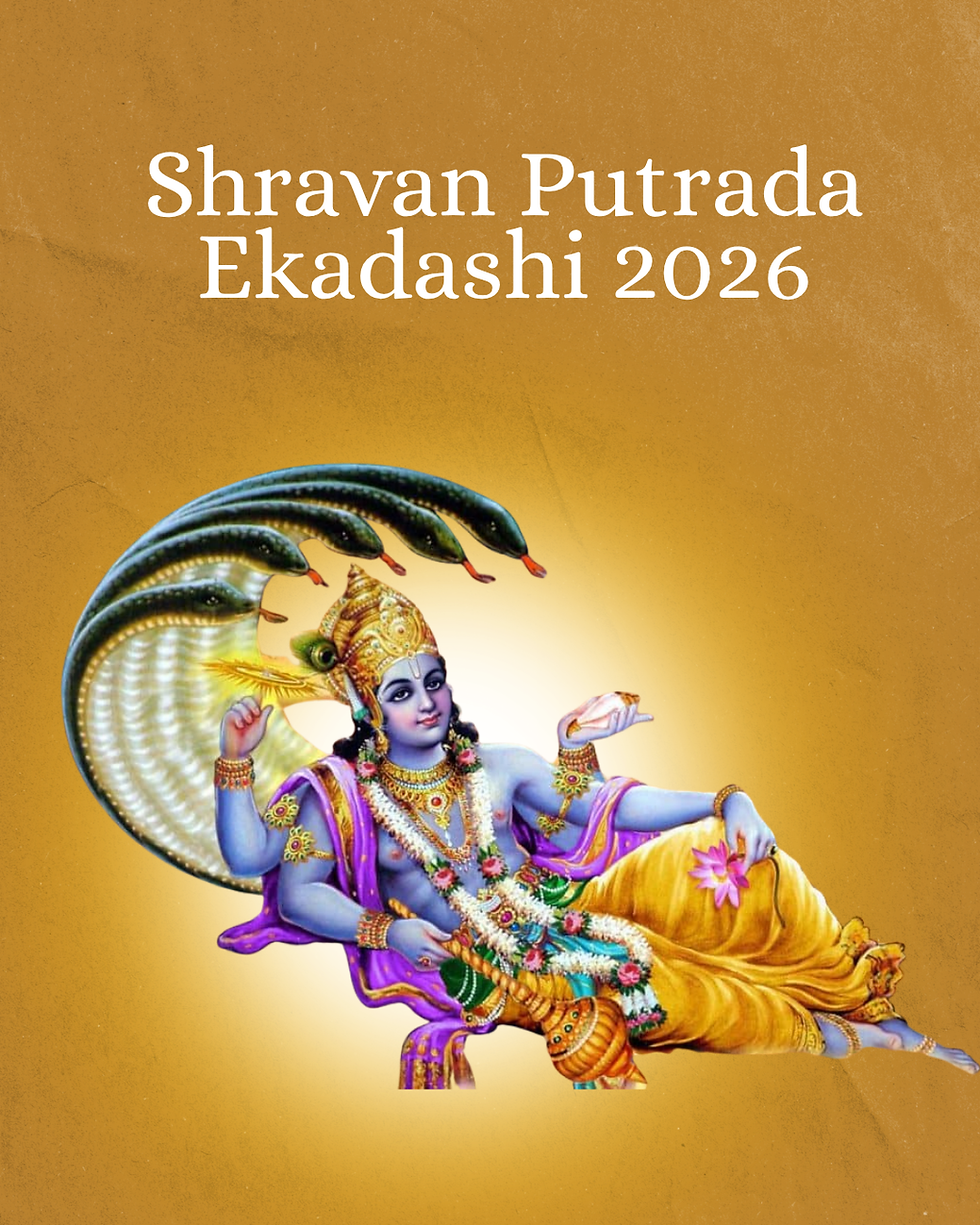
Shravan Putrada Ekadashi is an important Ekadashi dedicated to Lord Vishnu in Hindu tradition. Observed during the Shukla Paksha of the month of Shravan, this sacred Ekadashi is considered especially significant for those seeking blessings for family happiness, prosperity and the fulfillment of their wishes.
According to religious beliefs, observing Putrada Ekadashi with devotion and following the prescribed rituals invokes the blessings of Lord Vishnu. The vrat is traditionally associated with the blessing of progeny and family well-being.
The story of Putrada Ekadashi is narrated through the dialogue between Lord Shri Krishna and Arjuna. It tells the story of King Mahajit of Mahishmati, Maharishi Lomasha and the consequences of the king’s actions from a previous birth. Along with highlighting the importance of the Ekadashi vrat, the story offers a deeper message about karma, compassion and sensitivity towards all living beings.
What is Shravan Putrada Ekadashi?
The word ‘Putrada’ means “the giver of a son.” For this reason, this Ekadashi is traditionally associated with the desire for progeny.
According to Hindu religious beliefs, couples wishing for children may observe this Ekadashi and worship Lord Vishnu with devotion. However, the spiritual significance of Putrada Ekadashi is not limited to the desire for children. It is also considered an opportunity for self-discipline, devotion, righteous conduct and remembrance of Lord Vishnu.
When is Shravan Putrada Ekadashi 2026?
According to the Panchang, the Ekadashi Tithi begins at 2:00 AM on August 23, 2026, and continues until 4:18 AM on August 24, 2026. According to the Udaya Tithi tradition, the vrat will be observed on Sunday, August 23, 2026.
The auspicious time for worshipping Lord Vishnu is said to be from 7:32 AM to 12:24 PM. During this period, devotees can complete their morning rituals, worship Lord Vishnu, chant mantras and listen to or recite the Ekadashi Vrat Katha.
Dwadashi Parana Time
The Ekadashi vrat observed on August 23 will be completed with Parana on Dwadashi, August 24, 2026.
Parana Time: 1:41 PM to 4:16 PM
For devotees observing the fast, following the appropriate Parana time is traditionally considered an important part of Ekadashi observance.
Lord Shri Krishna Narrates the Story of Putrada Ekadashi to Arjuna
After hearing the glory of the various Ekadashis, Arjuna asked Lord Shri Krishna:
“O Kamalanayana! What is the name of the Ekadashi that falls during the Shukla Paksha of Shravan? Which deity is worshipped on this day, how should the vrat be observed, and what blessings are obtained by observing it?”
Lord Shri Krishna replied that the Ekadashi occurring during the Shukla Paksha of Shravan is known as Putrada Ekadashi. He then narrated the story of King Mahajit.
Why Was King Mahajit Childless?
At the beginning of the Dvapara Yuga, King Mahajit ruled the city of Mahishmati. He was known as a righteous, just and compassionate ruler who deeply cared for his subjects.
He looked after his people as though they were his own children. He never unjustly collected wealth from them, did not cause unnecessary suffering and respected the gods and Brahmins.
Despite all these virtues, there was one great sorrow in the king’s life—he was childless.
The king made numerous efforts to have a child, but none of them were successful. As time passed, his worries and sadness continued to grow.
One day, the king expressed his pain before his ministers. He said that he had never knowingly committed injustice against anyone, yet he could not understand why he was suffering from the pain of being childless.
To discover the reason behind the king’s suffering, his ministers set out into the forest in search of a great sage who could guide them.
Maharishi Lomasha Reveals the Secret of His Previous Birth
In the forest, the ministers met the great sage Maharishi Lomasha. They respectfully explained the king’s situation and asked him for a solution.
Maharishi Lomasha meditated and discovered the reason connected with the king’s past actions. He explained that in his previous birth, the king had committed an act that was responsible for his lack of progeny in his present life.
The sage narrated that in his previous birth, the king used to travel from one place to another. Once, on Jyeshtha Shukla Ekadashi, he had been hungry for two days.
At noon, he came across a reservoir and went there to drink water. A cow, which had recently given birth to a calf, was also drinking water from the reservoir.
The king drove the thirsty cow away from the water and began drinking himself.
According to Maharishi Lomasha, this act became the cause of the king’s childlessness in his present life.
At the same time, because he had remained hungry on Ekadashi in his previous birth, he had unknowingly earned the merit of fasting. Due to that merit, he was blessed with the position of a king in his present life.
Thus, the story illustrates how different actions performed in one life can produce different consequences.
Putrada Ekadashi Vrat Removes the King's Suffering
The ministers humbly requested Maharishi Lomasha to suggest a way through which the effects of the king’s past actions could be overcome and he could be blessed with a child.
Maharishi Lomasha advised them to observe Shravan Shukla Putrada Ekadashi with devotion. He instructed them to worship Lord Vishnu, remain awake during the night and dedicate the spiritual merit of their vrat to King Mahajit.
The ministers and people followed the sage’s instructions. They observed Putrada Ekadashi with faith and devotion and dedicated the merit of their vrat to the king on Dwadashi.
According to the religious कथा, as a result of this virtuous act, the king’s wife became pregnant and, after nine months, gave birth to a radiant son.
The greatest sorrow of King Mahajit came to an end and happiness spread throughout the kingdom.
This is why the Ekadashi of the Shravan Shukla Paksha came to be known as Putrada Ekadashi.
Worship of Lord Vishnu on Putrada Ekadashi
Worshipping Lord Vishnu is considered especially important on Putrada Ekadashi. Devotees traditionally wake up early, take a bath, wear clean clothes and take a sankalpa to observe the vrat.
During the puja, devotees offer yellow flowers, Tulsi leaves, fruits and naivedya to Lord Vishnu. Chanting Vishnu mantras and listening to or reciting the Ekadashi Vrat Katha are also considered auspicious.
Depending on their faith and capacity, devotees may observe a Nirjala fast or a fruit-based fast. Those with health concerns or other personal circumstances should observe the vrat according to their individual capacity and with appropriate care.
General Puja Vidhi for Putrada Ekadashi
The vrat and puja may generally be observed in the following manner:
Take a bath in the morning and wear clean clothes.
Take a vrat sankalpa before an image or idol of Lord Vishnu.
Offer yellow flowers and Tulsi leaves to Lord Vishnu.
Offer fruits, naivedya and Panchamrit.
Chant the mantra “Om Namo Bhagavate Vasudevaya.”
Read or listen to the Putrada Ekadashi Vrat Katha.
Spend the day remembering Lord Vishnu and engaging in bhajan and kirtan.
If possible, remain awake during the night and participate in devotional activities.
Complete the vrat with Parana on Dwadashi at the appropriate time.
Offer food, clothes or donations to those in need according to your capacity.
Religious Significance of Putrada Ekadashi
According to religious beliefs, observing Putrada Ekadashi with devotion invokes the blessings of Lord Vishnu. It is traditionally considered especially beneficial for progeny, family happiness and the fulfillment of sincere wishes.
The vrat also encourages devotees to develop self-control, follow a sattvic lifestyle and perform good deeds.
The true purpose of Ekadashi is not merely abstaining from food. It is also regarded as an opportunity for the purification of the mind, speech and actions.
Lessons from the Story of Putrada Ekadashi
The story of King Mahajit highlights the importance of karma. One should never assume that even a small action has no consequences.
The incident of the thirsty cow being driven away from water became the cause of great suffering in the king’s life. The story therefore emphasizes the importance of compassion and kindness towards every living being.
The story teaches us to:
Follow the path of truth.Never cause unnecessary suffering to any living being.Remain mindful of our actions.Keep faith in God.Always make an effort to perform good deeds.
Putrada Ekadashi Katha Saar
The central message of the Putrada Ekadashi story is that karma never goes in vain. Good actions generate punya, while wrong actions can bring consequences in one form or another.
King Mahajit received the position of a king in his present life due to the merit he had unknowingly earned by fasting on Ekadashi in his previous birth. However, because he had driven a thirsty cow away from water, he suffered from childlessness.
Later, through the observance of Putrada Ekadashi and the dedication of its merit, his suffering came to an end.
Therefore, we should always follow the path of dharma, truth, compassion and kindness. We should avoid causing pain to any living being, because causing unnecessary suffering to another is considered one of the greatest forms of wrongdoing.
Remembering Lord Vishnu with faith, devotion and good intentions is the beautiful spiritual message of this sacred Ekadashi.
Om Namo Bhagavate Vasudevaya. 🙏


Comments