
Why is ‘Bada Mangal’ Celebrated in the Month of Jyeshtha? Know the Story and Significance
- APD Creative Team

- May 5
- 2 min read
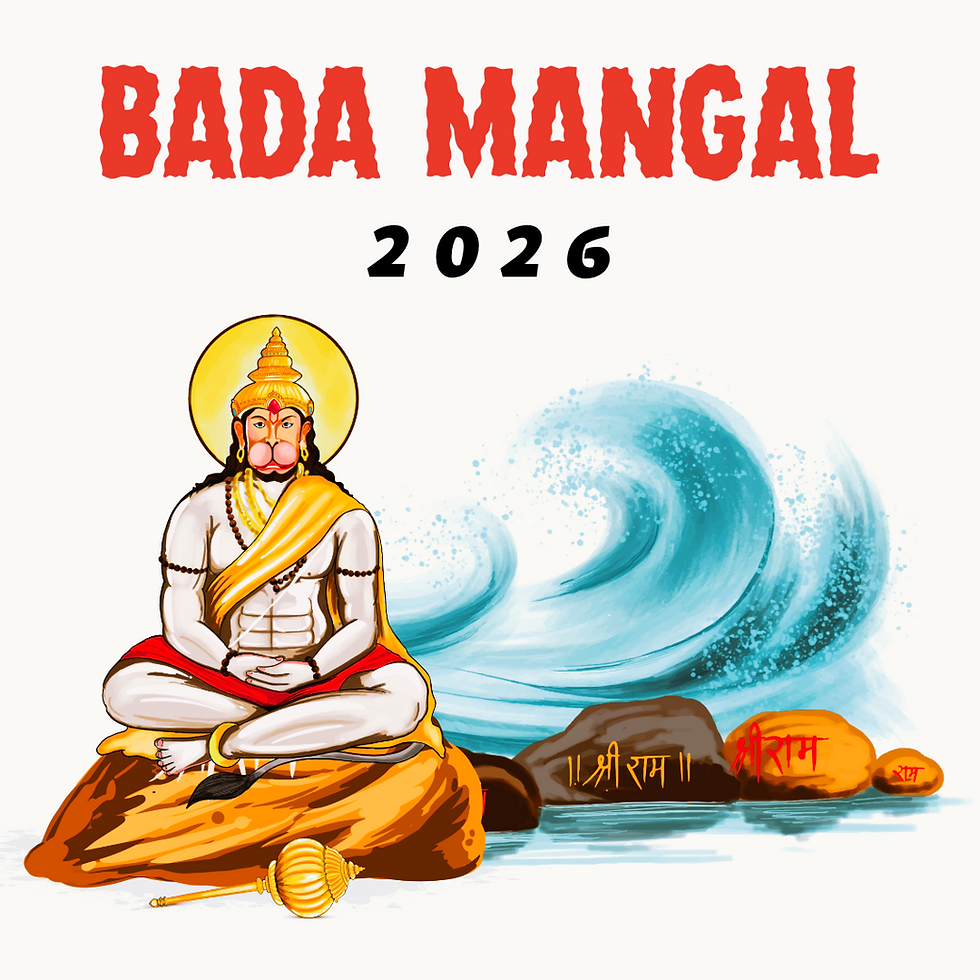
According to the Hindu calendar, every Tuesday falling in the month of Jyeshtha (May–June) is considered highly auspicious and is known as ‘Bada Mangal’ or ‘Budhwa Mangal’. This day is dedicated to the worship of Hanuman Ji, especially in his aged (elder) form.
Devotees visit temples, offer prayers, and organize large community feasts (bhandaras) across different places, making it a vibrant and spiritual occasion.
Mythological Story and Importance of Bada Mangal
As per religious beliefs, Lord Rama and Hanuman Ji first met during the Treta Yuga on a Tuesday in the month of Jyeshtha. This divine meeting is the primary reason why all Tuesdays of this month hold special significance.
It is believed that worshipping Lord Rama and Hanuman Ji on this day brings their blessings and fulfills devotees’ wishes. The spiritual benefits of prayers performed on Bada Mangal are considered more powerful than on regular days.
Popular Legends Associated with Bada Mangal
The Meeting of Rama and Hanuman
According to legend, when Lord Rama was searching for Goddess Sita, he encountered Hanuman Ji. This sacred meeting took place on a Tuesday in Jyeshtha, making the day highly auspicious.
Blessing of Immortality
Another belief states that Hanuman Ji received the boon of immortality (Chiranjivi) on a Tuesday in the month of Jyeshtha. This further enhances the importance of the day.
Bada Mangal 2026 Dates
In 2026, a rare and special occurrence brings 8 Bada Mangal Tuesdays in the Jyeshtha month:
May 5, 2026 – First Bada Mangal
May 12, 2026 – Second Bada Mangal
May 19, 2026 – Third Bada Mangal
May 26, 2026 – Fourth Bada Mangal
June 2, 2026 – Fifth Bada Mangal
June 9, 2026 – Sixth Bada Mangal
June 16, 2026 – Seventh Bada Mangal
June 23, 2026 – Eighth Bada Mangal
A Day of Devotion and Worship
On Bada Mangal, temples dedicated to Hanuman Ji witness huge gatherings of devotees. People offer sindoor and chola, recite the Hanuman Chalisa and Bajrang Baan, and seek strength, peace, and protection.
A Unique Tradition of Selfless Service
This festival is not just about पूजा (worship) but also about seva (service). Large-scale community feasts (bhandaras) are organized, where people from all walks of life come together to share food and blessings.
A Symbol of Unity and Brotherhood
Bada Mangal beautifully reflects faith, unity, and social harmony. This age-old tradition continues to bring people together, spreading messages of kindness, devotion, and togetherness.



Comments